 Overdose Prevention Sites (OPS) are an essential service that keep our communities safe. While the toxic drug emergency continues, it’s imperative that communities offer lifesaving harm reduction services to people with substance use disorders.
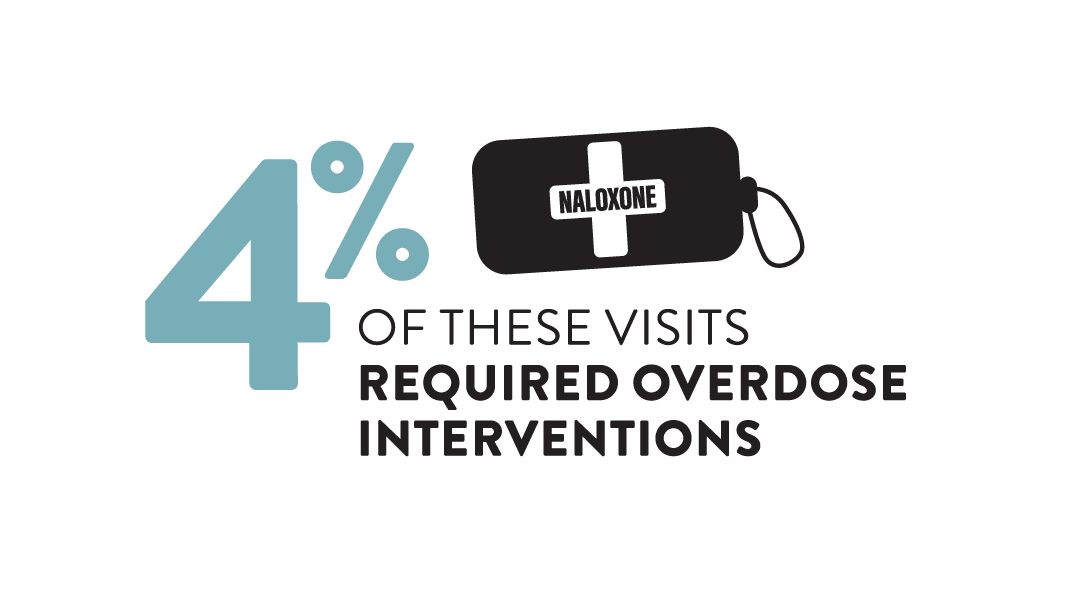
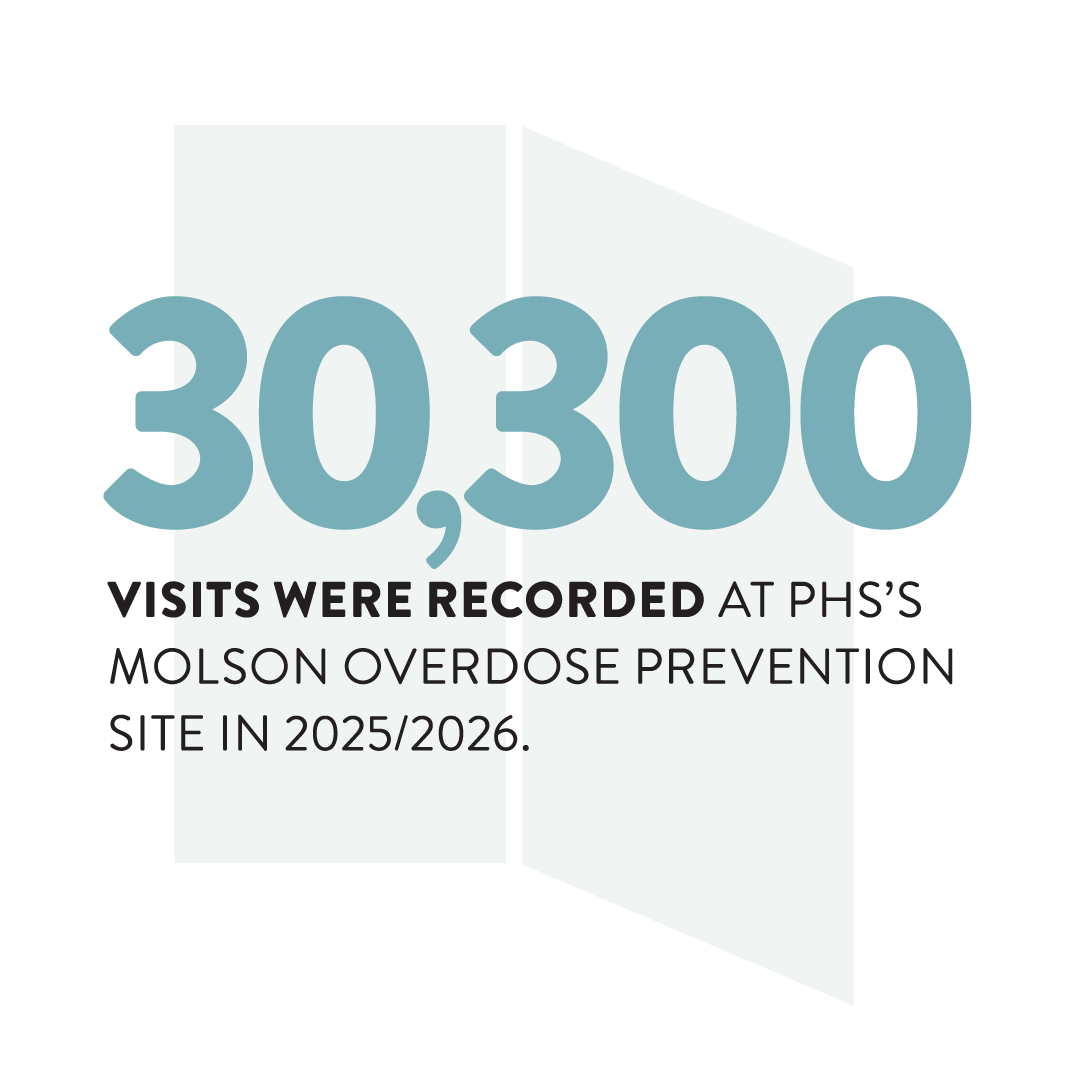
Molson Overdose Prevention Site recorded 30,300 visits in 2025/2026. Four per cent of these visits required overdose interventions, which meant many lives were saved through supervised harm reduction services.
On the frontlines, PHS employees intervene in a significant number of overdoses every day due to the high toxicity levels in illicit drugs. An issue that has been further complicated by a shift in drug use preferences from injecting illicit drugs to smoking them.
“By inhaling illicit drugs, people with substance use disorders can increase the potency of their high, but it also increases their risk of an overdose and a life-changing brain injury or death,” says Tanya Fader, Interim Director of Programs. “Many OPS lack supervised outdoor spaces, so people choose to inhale drugs alone in alleyways where an overdose can go unnoticed.”
PHS frontline workers are concerned with the spike in overdoses they are seeing because of the high levels of toxicity in drugs today. They are not only responding to community members visiting their facilities, but also people who have collapsed and are in distress outside, either in a nearby alleyway or sidewalk.
Why OPS is needed in our communities
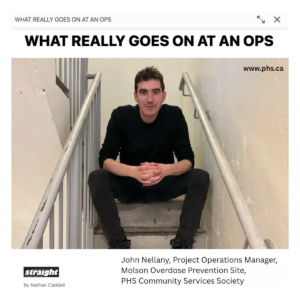
Simon Goodspeed, Senior Manager, Molson Overdose Prevention Site, and John Nellany, Project Operations Manager, Molson Overdose Prevention Site, spoke with the Georgia Straight (June 4 issue) to raise their concerns on how B.C.’s illicit toxic drug emergency has become normalized.
The article provides a real-world perspective of how an OPS operates, and the current issues faced by non-profits in keeping people in their community safe.
Visit the PHS website to learn more our Molson Overdose Prevention Site
Read more about our accomplishments in PHS’s 2026 Annual Report: Our Impact and the Grit Behind Our Work