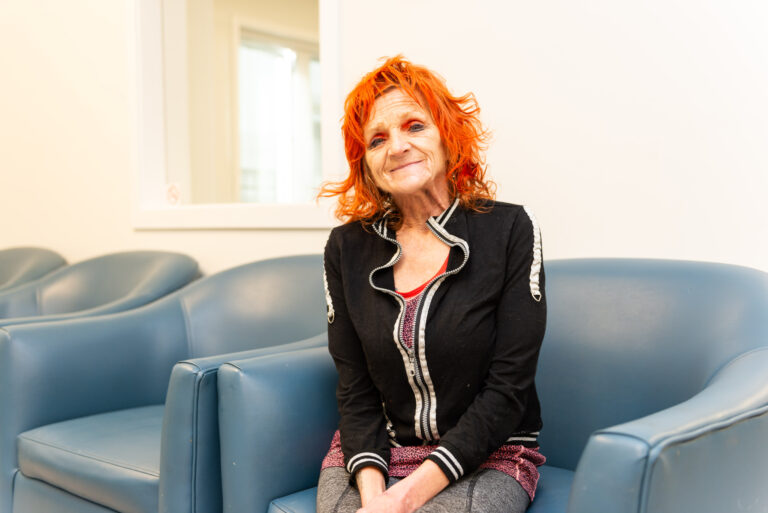
An innovative collaboration between healthcare providers a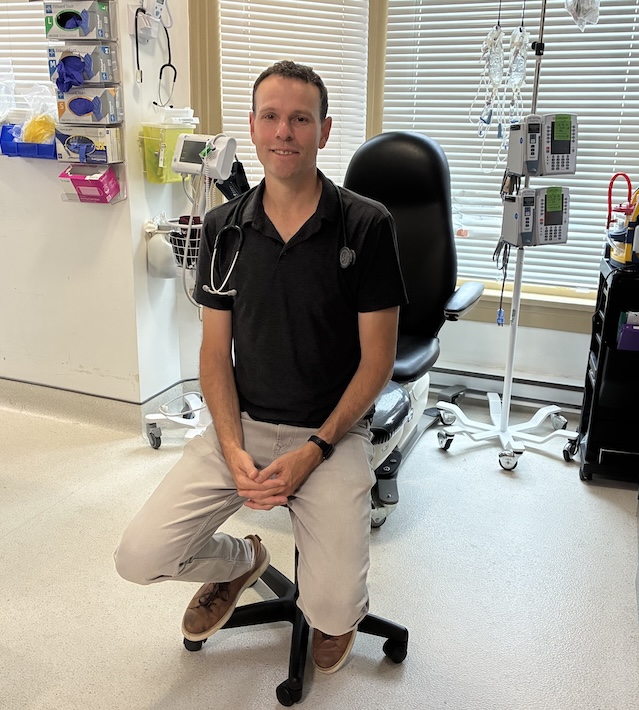 nd PHS Community Services Society (PHS) helps patients complete their antibiotic treatments and prevents rehospitalizations.
“By moving patients to the Hospital at Home Program here on the Downtown Eastside, we observed this amazing thing where patients were seen, heard, and cared for by a medical team in an environment that felt familiar to [them],” says Dr. Jonathan Dick, Internal Medicine, Lead Physician, for the Hospital at Home program. (Photo: Left)
When Providence Health Care (PHC) launched its Hospital at Home program in January 2024, it was available only to patients with housing and caregiver support, leaving many people experiencing homelessness without access.
As a result, some patients facing trauma, mental illness, or substance use challenges left hospital before completing IV antibiotic treatments, increasing their risk of complications and readmission.
This led to an innovative partnership between PHC, Vancouver Coastal Health (VCH) and PHS to provide a health care space for patients who might not have a fixed address or family to assist them.
Jonathan explains that patients with complex healthcare needs who use the Hospital at Home program today rarely self-dis charge before completing their treatment.
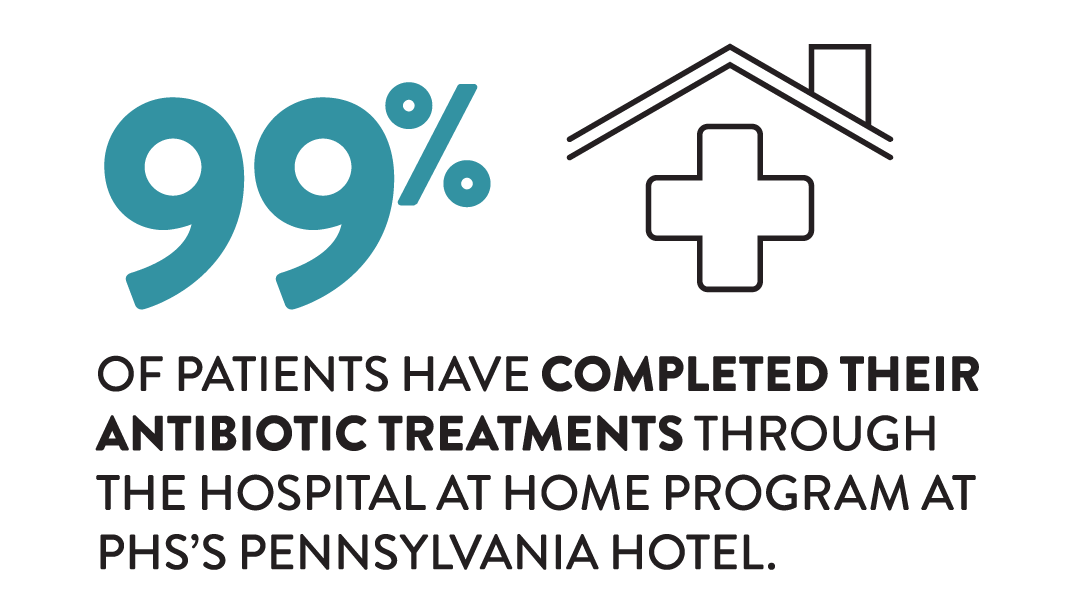 “Nearly 99 per cent of our patients complete their treatment through the [Hospital at Home Program],” says Jonathan.
The Community Transitional Care Team (CTCT) is co-managed through VCH/PHS as part of PHC’s Hospital at Home Program. These health care teams work closely with PHS staff who offer patients psychosocial supports and community referrals. Collectively, the three partners provide patients holistic wrap-around care.
BC healthcare partnership operated by PHS Community Services Society
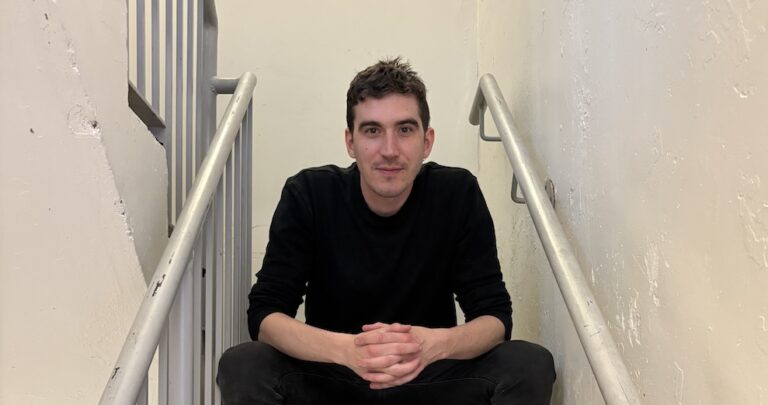
 Nicole Wheelhouse (Photo right) is the program operations manager for PHS who oversees this program.
Nicole’s team provides patients with psychosocial supports to assist them during their treatment. The clinic offers a home-like setting with private rooms, meals, and dignity-focused care. Patients have the flexibility to continue their daily life while staying engaged with their treatment.
“We take people to appointments, we’re cooking breakfast and serving food, and ensuring they are using drugs safely,” says Wheelhouse. “We really want to make sure that each patient feels heard and supported.”
The successful collaboration of the Hospital at Home Program and CTCT shows the value of integrating housing and healthcare to support vulnerable populations. Delivering care in the community helps prevent emergency visits, supports shorter stays in hospitals, and reduces hospital bed use.
Community Impact
“It’s been amazing to see a patient population who were not often thriving in the hospital, but then moving here and really, really succeeding, completing treatment, feeling just recognized and supported…something that is often not the case for people who are experiencing homeless ness,” says Jonathan.
Visit PHS’s website to learn more about our health programs.
Read more about our accomplishments in PHS’s 2025/2026 Annual Report: Our Impact and the Grit Behind Our Work